PATAGONIA WORNWEAR EXHIBITION

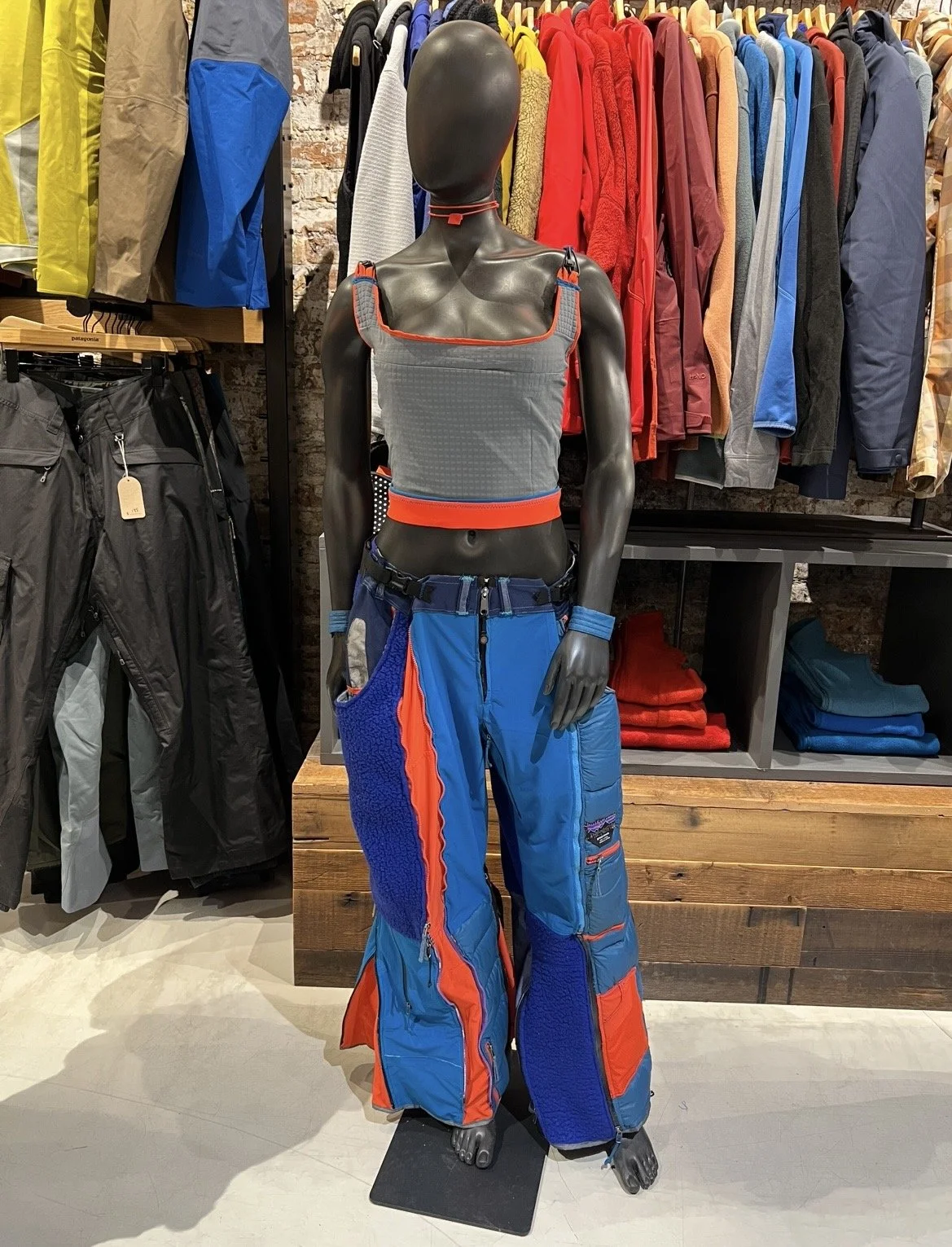
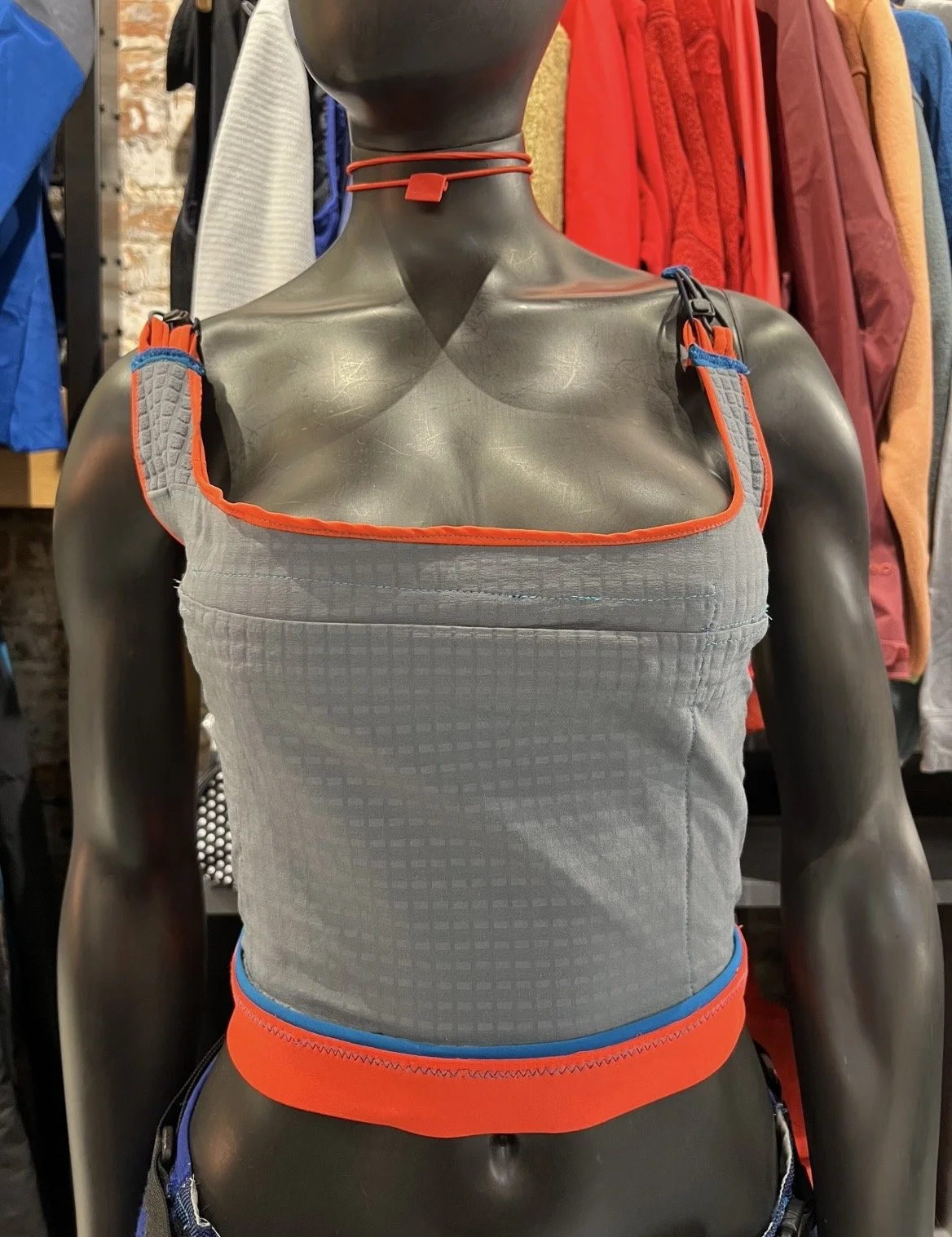
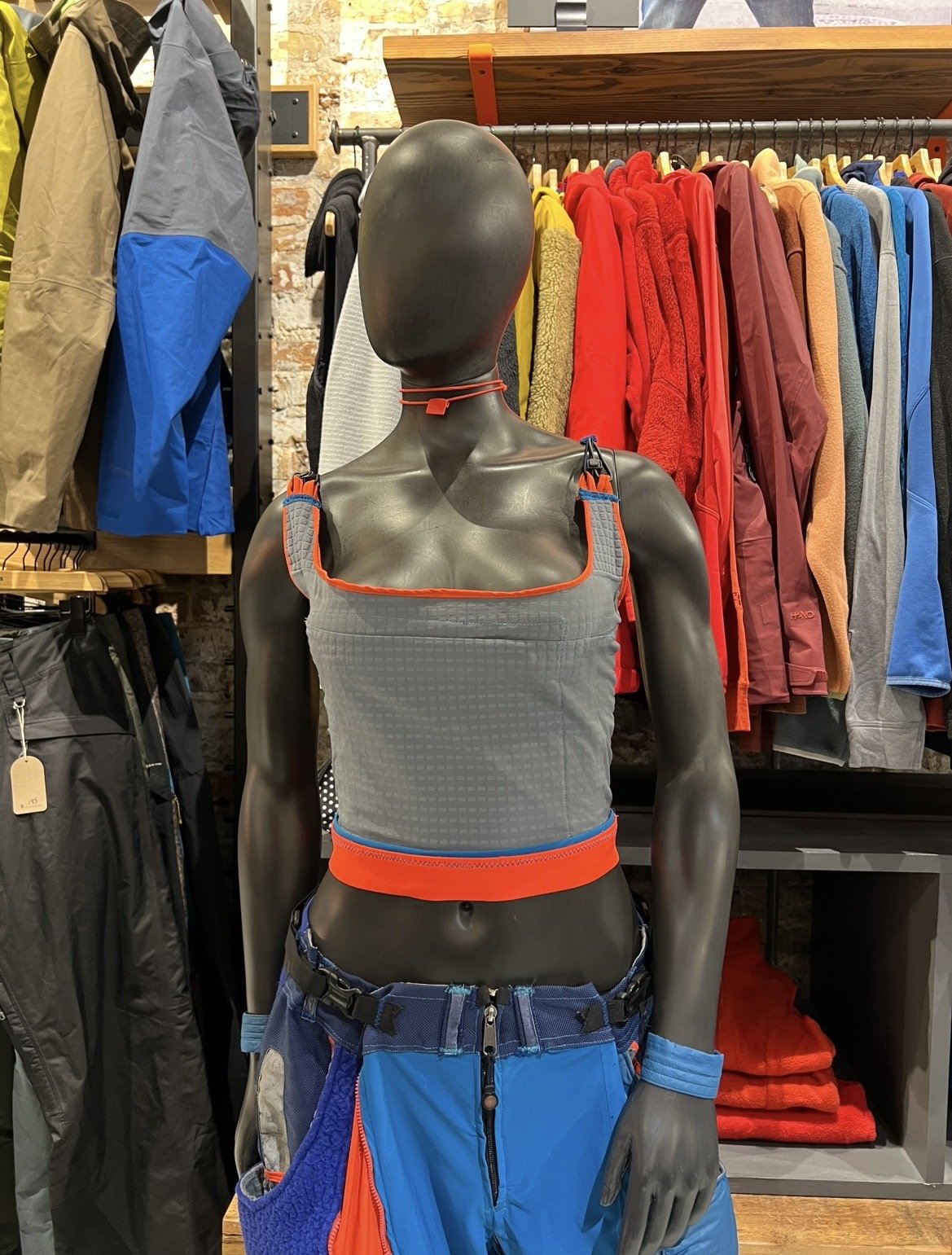
For the second consecutive year, Patagonia partnered with Columbia College Chicago to support its wornwear exhibition—this time collaborating with the Sustainable Fashion Practice course led by Jacob Victorine. Seven interdisciplinary teams of merchandisers and product developers were tasked with creating a two-piece upcycled outfit using garments provided by the Patagonia Chicago Workwear team. Our goal was to design with circularity at the forefront: intentional, functional, and genuinely sustainable.
Our class visited Patagonia’s Fulton Market flagship—the only U.S. location with a dedicated workwear storefront featuring repaired, refurbished, and preloved garments. From bins of reclaimed items, our team selectively chose pieces rich in hardware and modular potential. Zippers, buttons, straps, and unconventional materials, such as backpacks, shaped our vision for a fully adjustable, highly adaptable design. There was an emphasis on being selective and intentional with our picks, making sure we were not overly picking garments that we weren't going to use in the end, hinting back to our sustainable goals. In total, we sourced four jackets, two backpacks, and two pairs of pants to bring this concept to life.
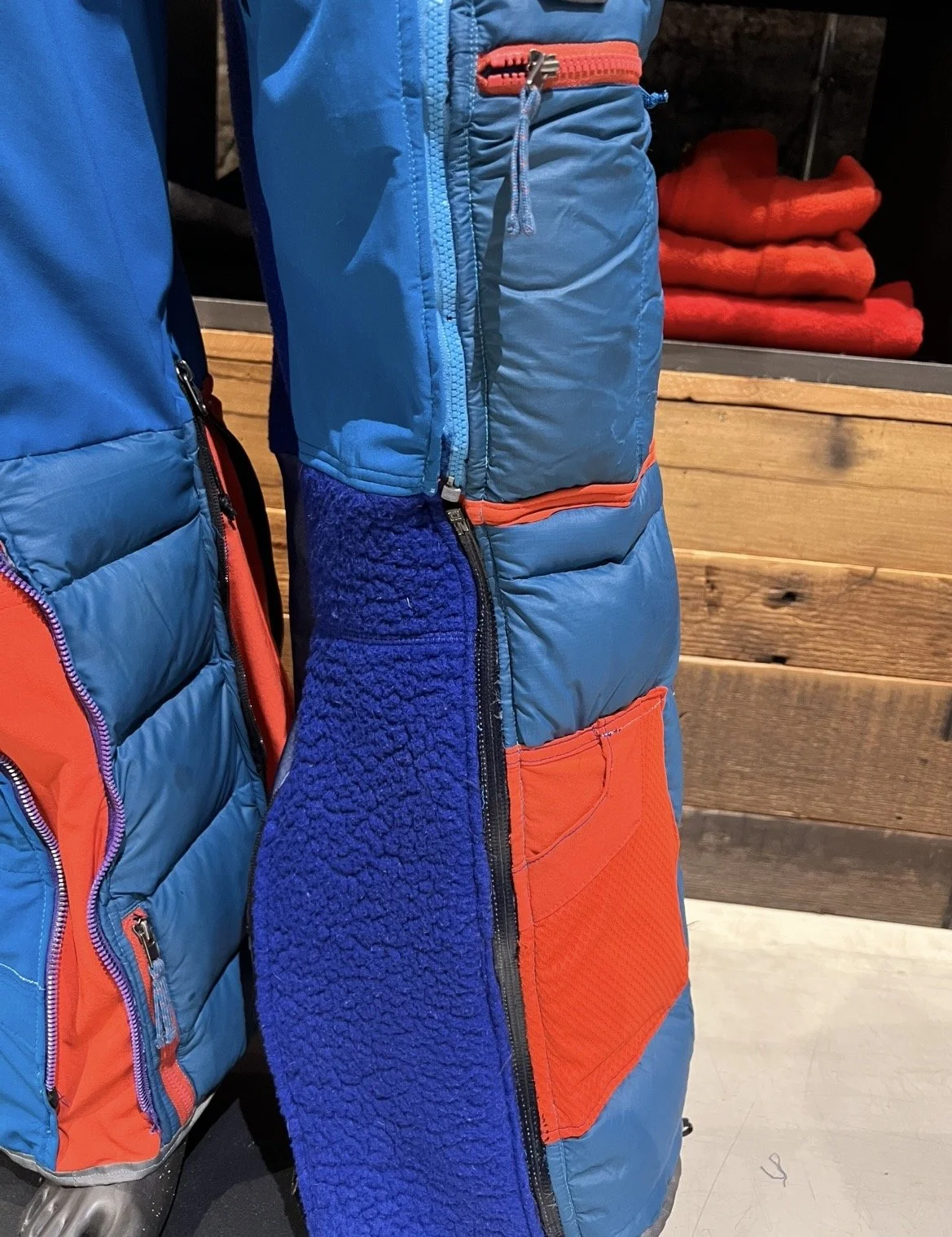
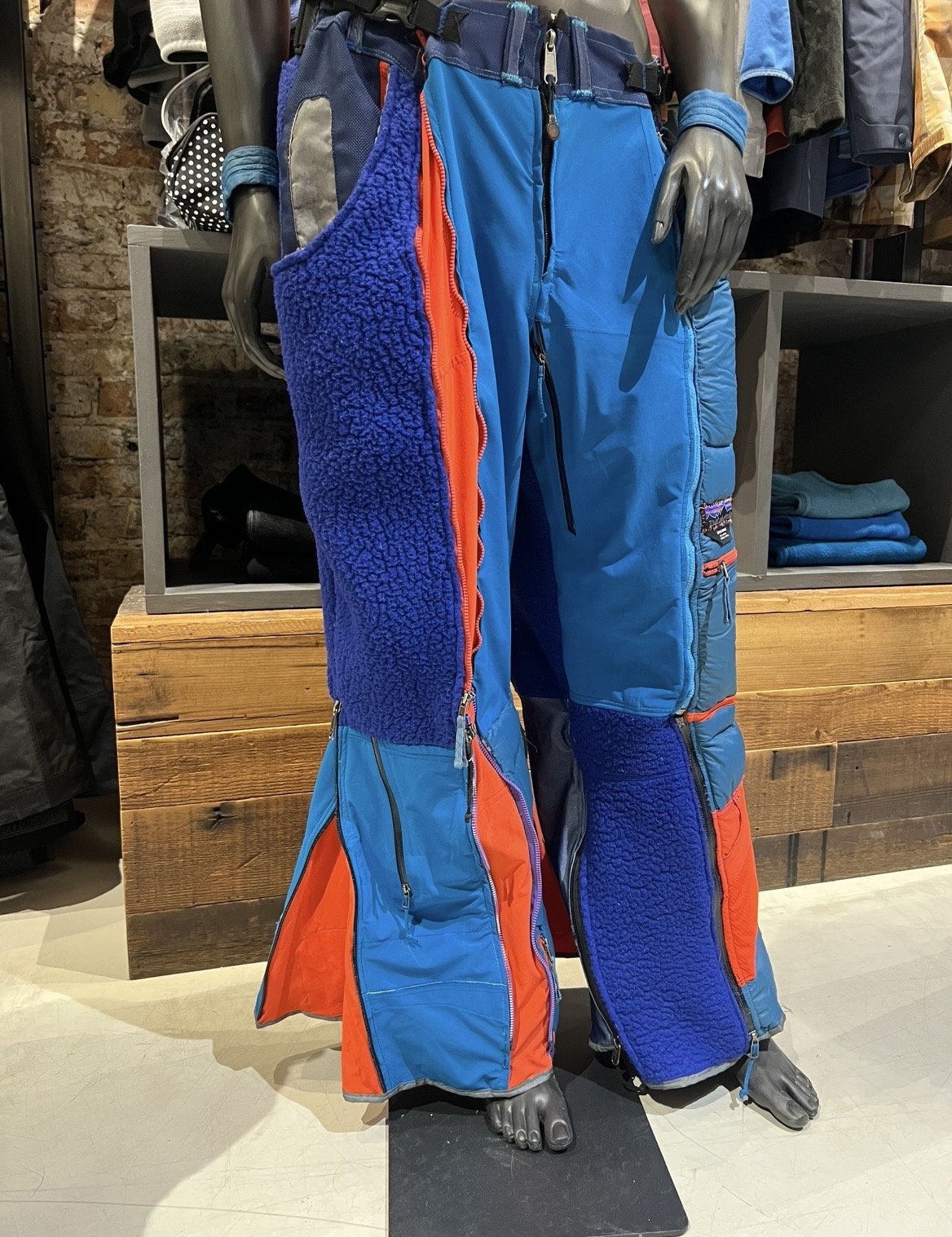
Product developers Antara Bhatega and Ronni Hull guided the development of a pair of pants engineered for size flexibility through gussets placed along the front, sides, and back. Our conversations centered on honoring Patagonia’s values—bold yet practical design that evolves alongside the wearer. The team drafted a pattern featuring an adjustable waistband using straps and buckles, as well as legs capable of shifting from straight to flared or wide through strategically placed zippers and expandable panels. We aimed for a garment that reflected the relationship between people and clothing—one that grows, adapts, and transforms over time. We also wanted to make something that Patagonia hasnt made before, a garment that would explore a different aesthetic world than the one they are currently in, the aesthetic mainly being inspired by club culture and city grunge.
Constructing the pieces over two to three weeks was deeply illuminating. As a merchandiser, stepping into product development was entirely new to me. My work usually consists of pitching decks, floorsets, or number forecasting. My job only gets hands-on when it comes to merchandising a storefront or a window, but working with the garments themselves a completely out of body for me. Pinning, tracing, and cutting pattern pieces offered a profound appreciation for the patience, accuracy, and artistry required in garment construction. Experiencing the craft firsthand revealed clothing as more than a necessity; it emerged as a genuine form of art—one I am now eager to explore further.
Three weeks later, we presented our completed garments. As someone who does not typically produce physical work, sharing something tactile and personal brought a new sense of vulnerability. It also offered a deeper respect for designers who release their creations into the world for others to interpret, question, and critique. It was a meaningful new experience. Thank you to Patagonia and Columbia College Chicago for the opportunity to create, learn, and share a design that resonated with so many.